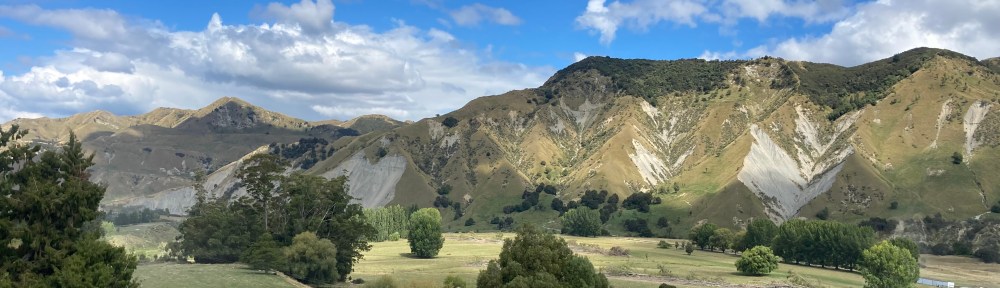
Ruakituri River was one of several important locations for Tūhoe, Ngāti Kahungunu, and Ngāti Ruapani. From these locations they travelled often considerable distances, to utilise resources seasonally (Wai 894, 2015).
Whakapapa
In Maoridom, our Whakapapa or genealogy start from the Io Matua Kore or the Supreme God or divine being, who created the first atua parents, Ranginui (sky father) and Papatuanuku (earth mother) and their children or gods that relate to stories or myths of today.
We, who of the Human being, are all derived from genealogy, the Maori people of this region descended from the Chief Kahungunu, and the chieftainess Rongomaiwahine.
Therefore, our whakapapa derives from:
Ko Matakuhia te Maunga = Matakuhia is our Mountain
Ko Ruakituri te Awa = Ruakituri is our River
Ko Pourangahua te whare nui = Pourangahua is our meeting house
Ko Whaongariki te whare kai = Whaongariki is our Dining hall
Ko Erepeti te marae = Erepeti is our marae
Ko Te Aitanga o Pourangahua, me te Ngati Hinanga nga hapu = Te Aitanga O Pourangahua and
Ngati Hinanga is our subtribe.
Ko Ngati Kahungunu te iwi = Kahungunu is our Tribe.
We are also known throughout Kahungunu O te Wairoa, as the Nga Tokorima O Hinemanuhiri, meaning we are descendants of the five children of Hinemanuhiri, being a Granddaughter of Kahungunu and Rongomaiwahine. These descendants’ affiliates are Tamaterangi, who are based at Rangiahua, Makoro, who are based at Whetu Marama O Makoro (Mill Pa, Frasertown Road), Hinanga which is Erepeti Marae Ruakituri, Pupuni who are based up at Putere, Pareora, whom are the descendants of the marae at Tauwharetoi.
Erepeti Marae
Erepeti is associated with several building projects as far back as the mid-1800s, this says much of its reputation as a Hononga, a meeting place, a crossroads for several iwi who used our Awa, Ruakituri as a highway: Tuhoe came from the west, Whakatohea from the north, Turanga nui a Kiwa from the east and Kahungunu from the south. With Erepeti then becoming something of a place where nations came together, it is no wonder that our Tipuna Pourangahua, built for himself a reputation as a peacemaker, a negotiator, a diplomat, even a fence sitter. …. He hunga taharua! He iwi taharua!
Pourangahua originated from the Tahora Lands of Papuni Station, where he was the first settler in those lands until the evasion of Tuhoe people, who were out to concede over lands for their own dominance.
Spiritual Values
Ngāi Kohatu have a korero about the formation of these rivers. According to tradition, Ruamano and Hinekorako were kin taniwha. From the top of a hill one day Ruamano and Hinekorako heard the sound of the sea.
Deciding to heed its call they began to race to the sea. Ruamano carved out the Ruakituri River and Hinekorako the Hangaroa. This legend is the source of the old people’s belief that has always associated Ruamano with the Ruakituri River and Hinekorako with the Hangaroa River. Ruakituri was said to be a male river and Hangaroa a female (Deed of Settlement). Hinekorako stayed at the TeReinga Falls but the taniwha Ruamano continued his way out to the sea, creating the Wairoa River.
Mahinga kai
Eel weirs were located at Tauwharetoi on the Ruakituri (Deed of Settlement).
Pā, Kāinga, ara
Permanent settlements included Te Reinga and Erepeti on the Ruakituri River.
Ngāti Hine-hika had interests in the Ruakituri River and resided at Te Reinga Falls.
Conflict
It was to Te Reinga Falls that the Wairoa people fled when attacked by Te Heuheu and Te Whatanui in 1828.
Some 40 years later, Te Kooti Arikirangi would also use this route in his escape into Tūhoe country. When TeKooti, escaped from the Chatham Islands he proceeded from Turanga A Kiwa through Ngatapa into the Ruakituri site at the entrance into Papuni Station across the Ford ( as it is today) to evade the Armed Constabulary that was pursuing him, on the 8th August 1868, The chase was lead by Captain Carr and Mr. Davis Canning, Constables Coates, Condon and Byrne and a friendly native named Rahira.
There were further military engagements between the Government troops and Te Kooti’s party at Ruakituri where Te Kooti was successful. He built a pā at Puketapu on the Ruakituri River and was there joined by upper Wairoa chiefs Te Waru and Nama, along with some of their followers (Wai 894 Report).
From there he wrote letters to both King Tawhiao and Tūhoe, seeking permission to enter their respective territories. Tawhiao, however, had declared 1867–68 as the ‘Year of the Lamb’ and told Te Kooti that he could expect no assistance from the Kingitanga. Te Kooti was not to fight or renew the wars and would be repelled if he encroached upon the Rohe Potae. Tūhoe held a hui at Ahikereru, attended by several of Te Kooti’s whakarau, at which it was decided that Te Kooti could stay in the upper Wairoa and hold ‘the confiscated or ceded land there’ (Wai 894 Report). Those who lost their lives in these conflicts were acknowledged by the establishment of a monument to those of Maori decent erected in 1980’s and a plaque erected to mark the graves of Captain Carr and Mr. Canning. These can be seen from the lower reaches of the Papuni rd.
Haere ra e Te Rangatira, Haere, Haere atu ra!
 The Guardians of the Ruakituri